Choosing an espresso machine can be surprisingly confusing. With so many designs, features, and price points available, it’s not always obvious what separates one type of machine from another.
Fortunately, most espresso machines fall into a few broad categories: manual, semi-automatic, automatic, and super-automatic. Each can produce enjoyable espresso, but they differ in how brewing pressure is generated, how much control the user has, and how much of the process is handled by the machine. There is also the big elephant in the room: Cost.
Understanding these differences is a useful first step toward finding the equipment that best suits your needs.
Manual Espresso Machines
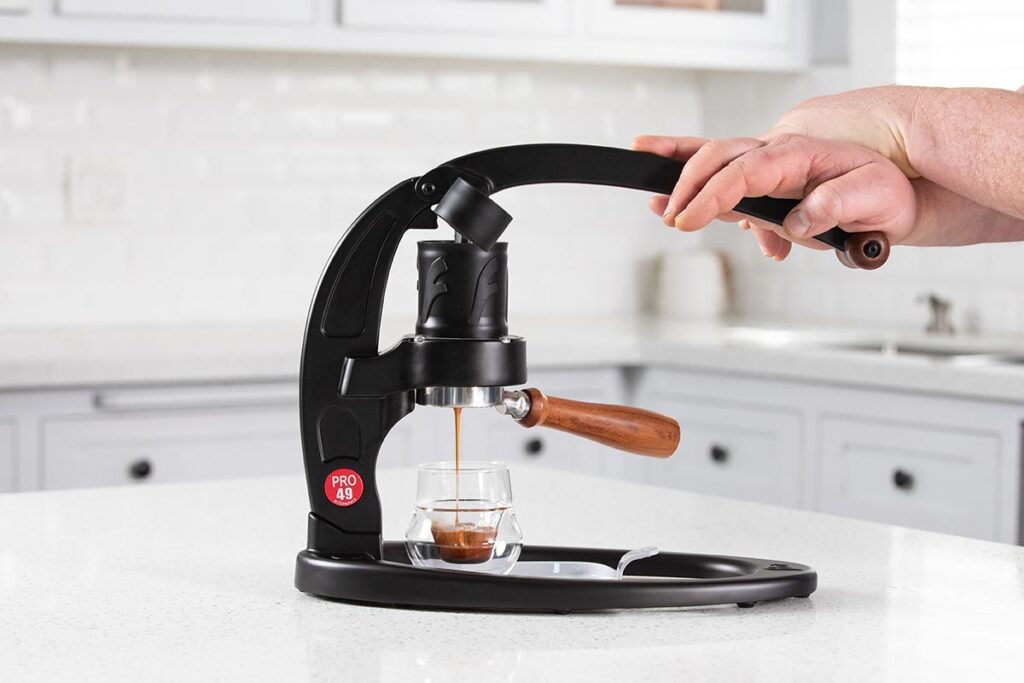
Manual espresso machines use mechanical force rather than an electric pump to generate brewing pressure. Most employ a lever and piston arrangement, although their specific mechanisms can differ.
In a direct-lever machine, like Flair Espresso’s line up of machines, the user applies force throughout the extraction, allowing brewing pressure to be adjusted continuously. This provides considerable flexibility for techniques such as low-pressure pre-infusion and pressure profiling. They also offer this at the most affordable price point of any of the espresso machine family, because they are compact and mechanically straightforward. This eliminates the need for electric pumps, integrated boilers, and complicated electronics and computers. Even those few that incorporate heating systems or additional features that simplify operation, like the valve plunger on the Flair Pro 49, or the electric brewhead preheater on the Flair 58+2, are generally exponentially more affordable than semi-auto, auto, and super-auto machines, and yet have the capability to produce excellent results in the cup.
A spring-lever machine works differently, and while still technically a manual machine, this is where we start to bridge over into the world of mechanical aid and automation. The operator compresses a spring, which then supplies the force required for extraction. Brewing pressure is determined primarily by the spring and piston mechanism, producing a declining-pressure profile. The thickness of the spring determines the peak pressure and the rate of the decline afterward.
Advantages:
- Direct involvement in brewing
- Potentially exceptional pressure control
- Greater understanding of coffee extraction
- Great coffee
- Mechanical simplicity
- A smaller footprint
- Lower maintenance
- Tend to be lower cost
Considerations:
- Greater user participation
- A learning curve
- Additional steps for heating water or preparing milk drinks, depending on the design
Manual espresso is particularly appealing to people who enjoy the brewing process and want to understand how their technique influences extraction.
Semi-Automatic Espresso Machines
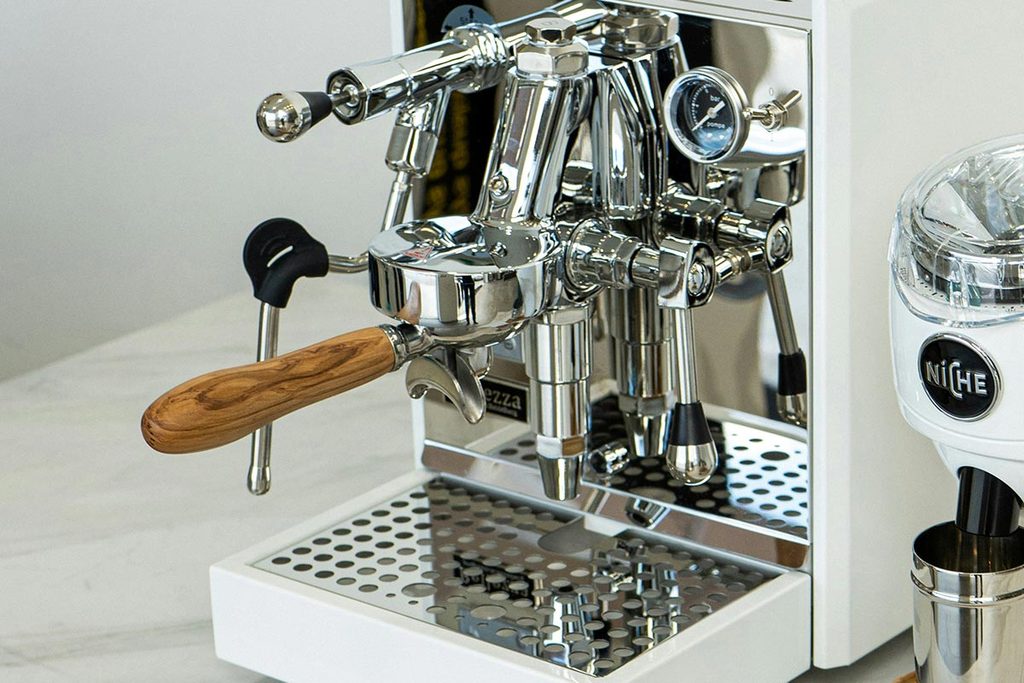
Semi-automatic machines use an electric pump to generate brewing pressure while leaving other important aspects of the process under the user’s control, such as the dose size, the coffee used, the grinder, puck prep, recipe and ratio, as well as when to stop the shot. Most conventional semi-automatic machines are designed to brew at a relatively consistent pressure, commonly around 9 bar. A few more sophisticated models (read: expensive) may offer adjustable pressure, flow control, or programmable extraction profiles. Semi-automatic machines generally incorporate their own water-heating systems, and many include steam wands for preparing milk-based beverages.
Advantages:
- Convenient pressure generation
- Integrated heating
- Familiar café-style workflow
- Wide range of designs and capabilities
- Consistency once a coffee has been located that works well with the machine
Considerations:
- Greater mechanical and electrical complexity
- Greater energy consumption
- Additional maintenance requirements
- Higher cost and space requirements
- Less overall ability to influence the outcome of the coffee
For many home baristas, semi-automatic machines offer a useful balance between hands-on preparation and mechanical assistance, giving up outright quality for convenience.
Automatic Espresso Machines
Automatic espresso machines share much of their underlying technology with semi-automatic machines. They generally use electric pumps and integrated heating systems, but add automatic control over one or more aspects of the extraction.
The most common distinction is volumetric or timed shot control.
Rather than requiring the user to stop the extraction manually, an automatic machine ends the shot according to a programmed water volume or brewing time. The barista may still be responsible for grinding, dosing, distributing, and tamping the coffee, just as with a semi-automatic machine. This distinction is important: automatic doesn’t necessarily mean the machine prepares the entire drink.
Advantages:
- Convenient shot termination
- Workflow streamlining
- Reduced need to monitor every extraction
Considerations:
- Additional electronic components
- Potentially higher cost
- Less direct involvement in determining when the shot ends
- Giving up some potential in cup quality to secure added convenience
Automatic machines can be especially useful in environments where repeatability and efficient preparation are priorities.
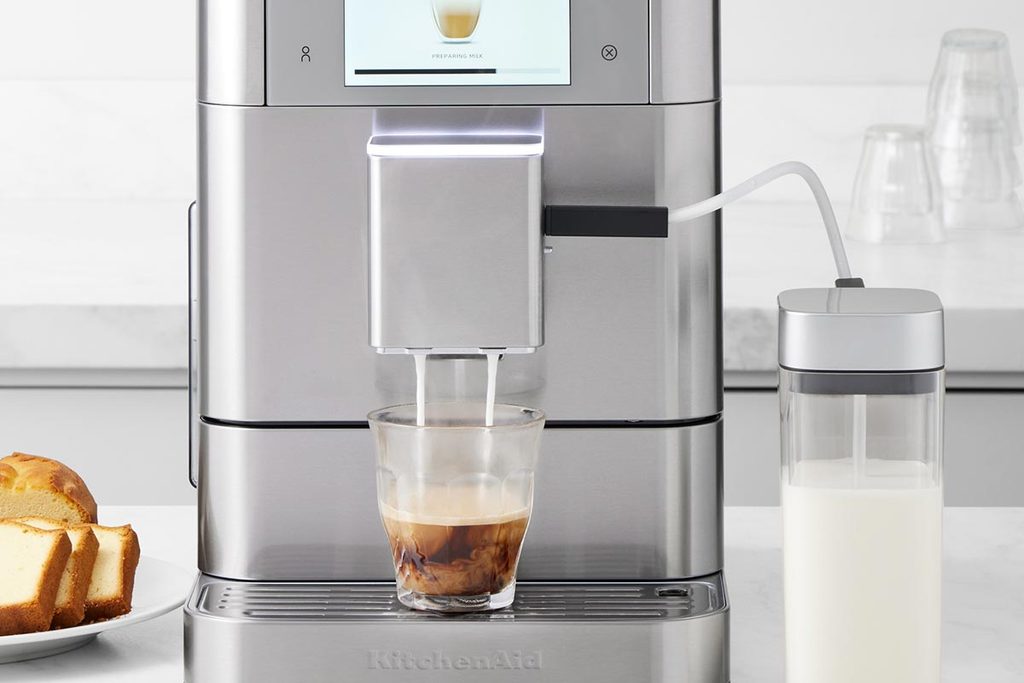
Super-Automatic Espresso Machines
Super-automatic machines take automation considerably further.
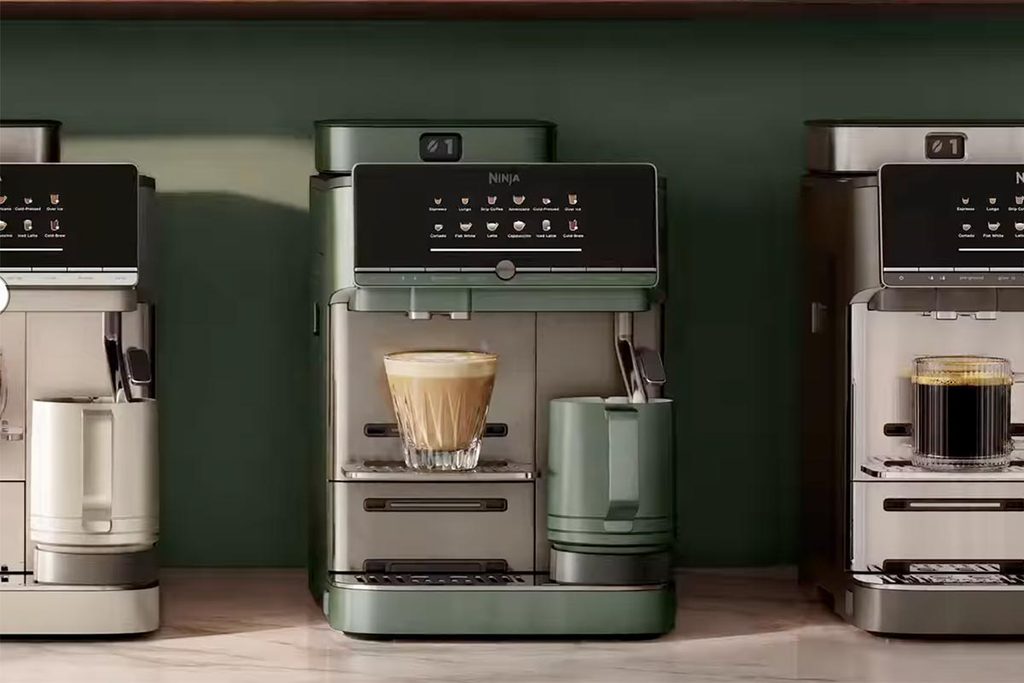
These systems typically incorporate a grinder, dosing mechanism, brewing chamber, and automated extraction controls within a single appliance. Many also include automatic milk preparation. Instead of manually preparing a portafilter and controlling the extraction, the user generally selects a beverage and allows the machine to complete most of the process.
The convenience is substantial, particularly for households or workplaces where multiple people want espresso-based drinks without learning traditional barista techniques.
However, that convenience comes with tradeoffs.
Super-automatic machines may offer less flexibility in grind adjustment, puck preparation, extraction profiling, and other variables that influence espresso quality. Their integrated mechanisms can also introduce additional cleaning and maintenance requirements, and if they break, often require sending in the entire machine for service, so the house cafe is closed until further notice.
Advantages:
- Convenience
- Minimal training
- Integrated drink preparation
Considerations:
- Almost no hands-on control
- The highest mechanical complexity
- Potential limitations in extraction flexibility
- Overall quality of the drinks
Which Espresso Machine Is Right for You?
The differences between these categories become clearer when viewed in terms of how much of the brewing process is handled by the user.
| Machine Type | Pressure Generation | Extraction Control | User Involvement and Influence over result |
|---|---|---|---|
| Manual, direct lever | User-operated lever | User actively controls pressure | High |
| Manual, spring lever | Manually compressed spring | Primarily determined by spring mechanism | Moderate |
| Semi-automatic | Electric pump | User generally starts and stops the shot | Moderate |
| Automatic | Electric pump | Machine stops the shot automatically | Low to moderate |
| Super-automatic | Electric pump | Most brewing steps automated | Low |
These are general distinctions rather than rigid rules. There is overlap, and individual machines may combine features from multiple categories.
For example, a sophisticated semi-automatic machine may offer more programmable extraction control than a basic automatic model. Likewise, a compact direct-lever machine may provide pressure-profiling capabilities, and digital feedback and visual graphing or the brew variables, that would require considerably more elaborate technology in a pump-driven machine.
Understanding What Matters Most
It’s tempting to think of espresso machine categories as a progression from basic to advanced, with greater automation (and cost) representing greater capability.
In practice, that isn’t how espresso equipment works.
Automation primarily changes the amount of work performed by the machine. It doesn’t guarantee the quality of the espresso or the degree of control available over extraction.
As such, a manual machine can provide remarkable brewing flexibility, and the best overall results. A semi-automatic machine can offer an excellent balance of convenience and involvement. An automatic machine can simplify repetitive tasks, while a super-automatic machine can make espresso-based beverages accessible with minimal preparation.
Each approach serves different priorities.
The best espresso machine isn’t necessarily the most expensive, the most automated, or the most mechanically sophisticated. It’s the one that provides the capabilities you value and a brewing experience you enjoy.