
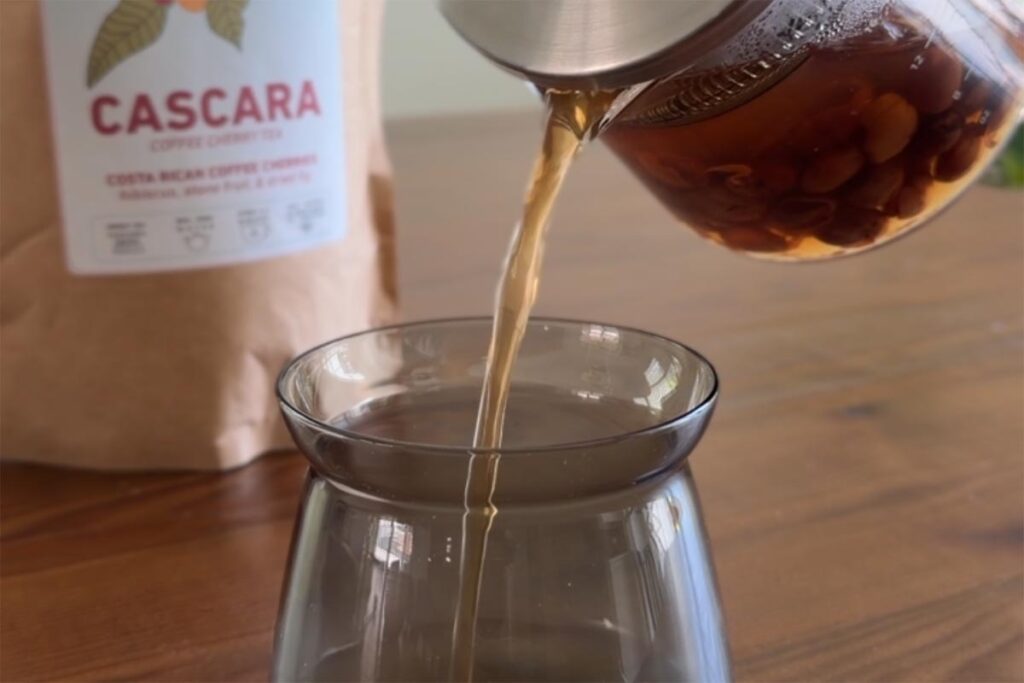
Most people know coffee for its beans. But what if I told you one of the most interesting coffee beverages doesn’t use the bean at all?
Meet cascara.
It’s a naturally sweet, fruit-forward drink made from the dried skin and fruit of the coffee cherry after the coffee seed—the bean we roast and brew—is removed. While cascara has been consumed in coffee-producing countries for generations, it’s only recently begun gaining traction among specialty coffee drinkers in the United States.
If you’ve never tried it before, imagine something that sits somewhere between coffee and tea. It carries the fruit character of the coffee cherry but lacks the roasted flavors we typically associate with coffee. The result is a unique beverage that’s refreshing, approachable, and surprisingly versatile.
What Is Cascara?
To understand cascara, it helps to understand how coffee is processed.
Coffee begins as a fruit called a coffee cherry. Inside that cherry are the seeds that eventually become coffee beans. During processing, the fruit is removed so the seeds can be dried, exported, roasted, and brewed.
Traditionally, much of that fruit was discarded or composted. Cascara offers another use for it.
The word “cascara” means “husk” or “peel” in Spanish, though the product typically consists of both the skin and some of the fruit surrounding the coffee seed. Once separated from the bean, the fruit is dried and can later be brewed similarly to tea.
While cascara comes from a coffee plant, it’s a completely different drinking experience than coffee itself.
What Does Cascara Taste Like?
One of the most surprising things about cascara is what it doesn’t taste like.
Most people expect something resembling coffee, but cascara contains none of the roasted characteristics associated with brewed coffee. Instead, the flavor is often sweet, juicy, and fruit-driven.
Common tasting notes include:
- Dried cherry
- Raisin
- Dates
- Hibiscus
- Red berries
- Stone fruit
- Brown sugar
The exact flavor depends on the coffee variety, processing method, and origin, but most cascara drinks share a similar fruit-forward profile.
The body sits somewhere between tea and coffee. It’s lighter than coffee but generally richer and more textured than a typical herbal tea.
One of my favorite ways to describe it is this:
It’s as if coffee and tea had a baby.
Does Cascara Contain Caffeine?
Yes—but generally less than a typical cup of coffee.
Because cascara comes from the fruit rather than the seed, the caffeine content tends to be lower than that of brewed coffee while still providing a mild boost. The exact amount varies significantly depending on the coffee variety and brewing method, but most people find it lands somewhere between herbal tea and coffee in terms of perceived stimulation.
For many coffee drinkers, it can be a nice afternoon option when they want something flavorful without the intensity of another full cup of coffee.
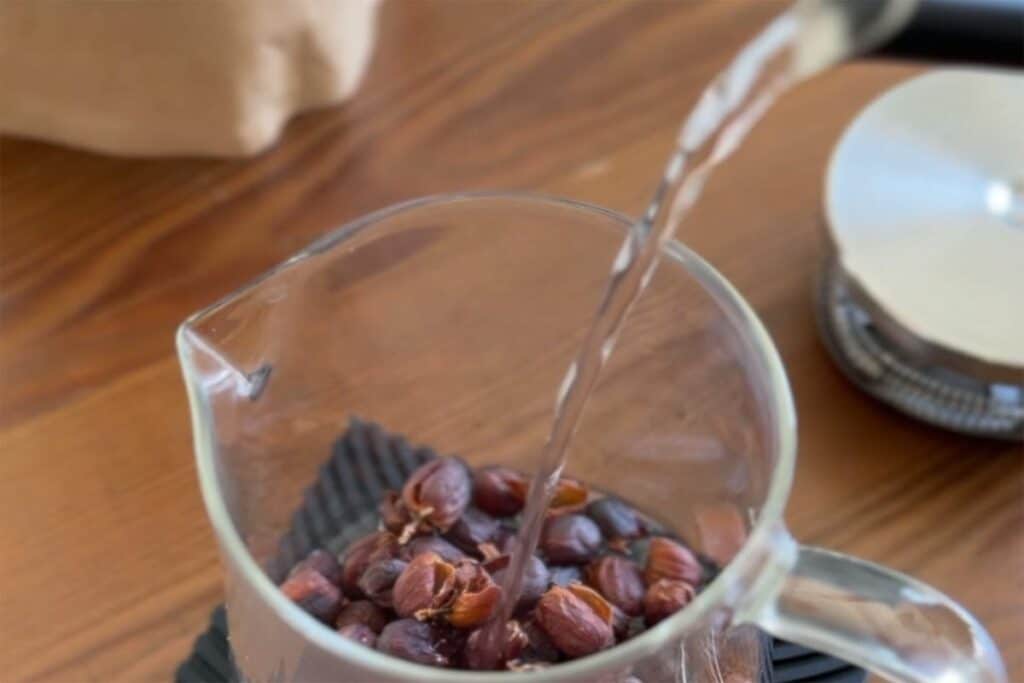
How to Brew Cascara Hot
One of the best things about cascara is how simple it is to prepare.
Unlike coffee, there’s no need to worry about grinders, extraction theory, or pouring techniques. Just steep it like a tea.
Hot Cascara Recipe
Ingredients
- 15g cascara
- 300g water at approximately 200°F (93°C)
Instructions
- Add cascara to a tea brewer, French press, or cup.
- Pour hot water over the cascara.
- Steep for 4–6 minutes.
- Strain and serve.
You can enjoy it as-is or add a touch of honey to complement the natural fruit sweetness.
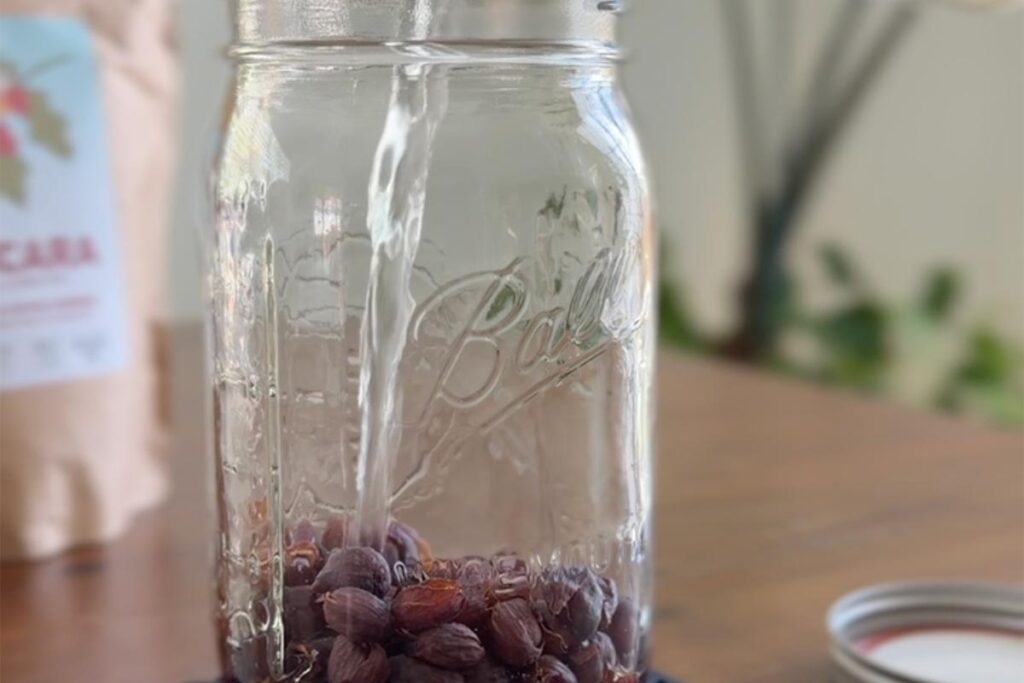
How to Brew Cascara Cold
Cascara also works exceptionally well as a cold beverage.
Cold brewing emphasizes sweetness while creating a refreshing drink that’s perfect for warmer weather.
Cold Brew Cascara Recipe
Ingredients
- 25g cascara
- 350g cold water
Instructions
- Combine cascara and water in a container.
- Refrigerate for approximately 14 hours.
- Strain the cascara.
- Serve over ice.
The resulting drink is bright, refreshing, and naturally sweet without feeling heavy.
Why More Coffee Roasters Are Offering Cascara
While cascara remains relatively uncommon compared to roasted coffee, it’s becoming easier to find from specialty roasters.
Part of the appeal is that it allows coffee drinkers to experience another side of the coffee plant. Rather than focusing exclusively on the seed, cascara highlights the fruit that surrounds it.
It also creates additional value for coffee producers by utilizing a part of the coffee cherry that was historically underutilized.
Today you’ll find cascara offered by a growing number of specialty roasters and importers, often sourced from the same farms producing high-quality coffee.
Who Should Try Cascara?
Cascara is a great fit for:
- Coffee drinkers looking for something different
- Tea lovers curious about coffee
- People who enjoy fruit-forward beverages
- Anyone seeking a lower-caffeine alternative to coffee
- Home brewers who want an easy, approachable brewing experience
Even seasoned coffee enthusiasts are often surprised by how different cascara tastes from what they expect.
Final Thoughts
One of the things I love most about specialty coffee is discovering the parts of the coffee world that often get overlooked. Cascara is a perfect example.
It offers a completely different way to experience the coffee plant—one that’s sweet, fruit-forward, and remarkably easy to brew. Whether served hot on a cool morning or cold on a summer afternoon, it delivers a drinking experience that’s familiar enough to enjoy immediately yet unique enough to feel like a discovery.
If you’ve never tried cascara before, it’s worth seeking out. It might not taste like coffee, but that’s exactly what makes it so interesting.